In industrial environments, dust collection is an important part of maintaining cleaner workspaces, protecting equipment and supporting smooth production. Industries such as cement manufacturing, flour milling, ceramics and soap production often generate dust during processing. Without a suitable filtration setup, airborne particles can affect equipment performance and create housekeeping challenges.
While filter bags receive much of the attention in dust collection systems, the supporting structure is equally important. Industrial filter cages help maintain the shape of filter bags and provide the support needed during filtration and cleaning cycles.
For businesses sourcing an Industrial Filter Cages Manufacturer in Dubai or elsewhere in the UAE, understanding cage materials, coatings, applications and construction is essential. This guide explains what to look for when selecting filter cages for industrial dust collection requirements.
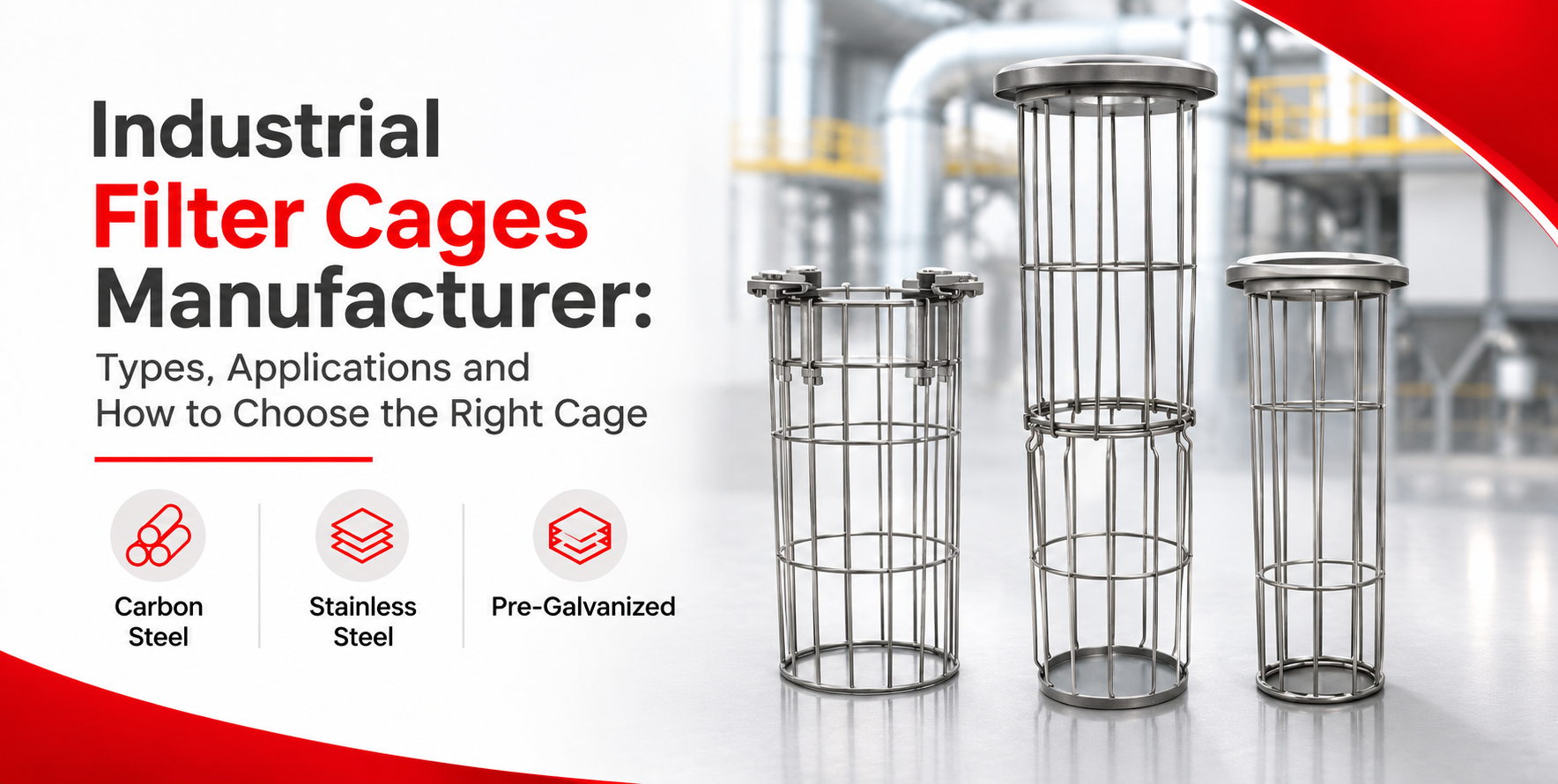
Industrial filter cages are supporting structures installed inside dust collector filter bags. They help prevent the filter bags from collapsing during operation and maintain their shape as air passes through the filtration system.
During normal operation, dust-laden air enters the dust collector, and the filter bag captures suspended particles. The cage supports the bag from the inside, allowing it to maintain its intended shape.
In pulse-jet dust collection systems, compressed air is periodically used to dislodge accumulated dust from the filter bag. The cage provides structural support during these cleaning cycles.
A properly selected cage helps maintain the filter bag's position and supports consistent operation of the dust collection system.
Filter cages are available in different material and coating configurations. The right option depends on the operating environment, dust characteristics and filtration system requirements.
Carbon steel filter cages are used in industrial dust collection applications where structural support is required. Their suitability depends on the operating environment, surface protection and maintenance requirements.
They can be considered for applications such as cement processing, flour milling and other manufacturing operations.
Stainless steel cages are another option for industrial filtration systems. Material selection should account for environmental exposure, operating conditions and the requirements of the dust collection equipment.
The appropriate stainless steel grade should be confirmed according to the application.
Pre-galvanized filter cages are made using steel with a protective zinc coating. This coating helps protect the underlying steel against corrosion.
They may be considered where environmental exposure and maintenance requirements make corrosion protection an important selection factor.
The coating applied to a filter cage can influence its resistance to corrosion, surface protection and suitability for different operating environments.
Depending on the application, some commonly available coating options include:
Epoxy Polyester Coating: This coating provides a protective surface finish and helps protect the metal cage against environmental exposure.
PVC Vinyl Coating: PVC vinyl coating provides an additional protective layer. Its suitability depends on operating temperature and chemical exposure.
Galvanized Coating: Galvanization provides zinc-based corrosion protection to the underlying steel.
Metro International offers filter cages with epoxy coating, PVC vinyl coating and galvanized finishes, allowing businesses to consider different configurations for their filtration requirements.
Selecting an unsuitable filter cage can affect how the overall dust collection system operates. The cage needs to work correctly with the filter bag and the equipment in which it is installed.
The primary function of a filter cage is to support the filter bag from the inside. Proper support helps prevent unwanted deformation during filtration and cleaning.
In pulse-jet systems, filter bags experience repeated cleaning cycles. The cage provides structural support while accumulated dust is removed from the bag surface.
A correctly matched cage helps maintain the intended position and shape of the filter bag. This supports the proper functioning of the overall filtration arrangement.
The cage must fit the dust collector and filter bag correctly. Incorrect dimensions or construction may create installation difficulties and affect system operation.
Before purchasing filter cages, industrial buyers should evaluate the following specifications.
Start by identifying the conditions in which the cage will operate. Consider moisture exposure, dust characteristics, operating temperature and the possibility of corrosion.
Carbon steel, stainless steel and pre-galvanized options should be evaluated according to these requirements.
Cage dimensions must match the filter bag and dust collector design. Important measurements include:
These details should be confirmed before placing an order.
The coating should be selected according to the operating environment. For example, a system exposed to moisture may have different corrosion protection requirements from one operating in a relatively dry environment.
A filter cage and filter bag function as a combined filtration arrangement. Their dimensions and construction must be compatible.
Businesses should also review the specifications of the dust collector filter bags and sleeves used in their existing systems before selecting a cage.
Different manufacturing industries generate airborne dust during material handling, processing and production. Filter cages support the dust collector bags used in these environments.
Some common applications include:
Cement Industry: Cement production and material handling generate fine dust. Filter cages support the filter bags used in dust collection systems across relevant processing areas.
Wheat Flour Mills: Flour milling involves handling and processing fine powder. Dust collection systems help capture airborne particles during production.
Ceramic Industry: Ceramic manufacturing involves activities such as mixing, material handling and finishing, which can generate airborne dust.
Soap Powder Manufacturing: Powder handling and processing can release fine particles. Suitable dust collection equipment helps manage these emissions.
For industrial businesses in Dubai and across the UAE, cage selection should reflect the specific production environment and dust collection equipment being used.
Finding a suitable filtration product involves more than comparing material and price. Businesses also need to consider product specifications, construction, coatings and compatibility with their existing dust collection systems.
Established in the UAE in 1995, Metro International LLC offers a range of industrial filtration products for different manufacturing requirements.
Its industrial filter cages are designed for applications in the cement, wheat flour, ceramic and soap powder industries.
The available product specifications include carbon steel, stainless steel and pre-galvanized materials, with epoxy coating, PVC vinyl coating and galvanized finish options.
Businesses can also explore the wider filtration solutions range to understand the available products for their industrial requirements.
Before selecting a product, buyers should share the required cage dimensions, material preference, coating requirements and dust collector specifications to help establish compatibility.
An industrial filter cage supports the filter bag from the inside. It helps maintain the bag's shape during filtration and cleaning cycles in dust collection systems.
Common materials include carbon steel, stainless steel and pre-galvanized steel. The suitable material depends on the operating environment and corrosion protection requirements.
Filter cages are used in dust collection systems across industries such as cement manufacturing, wheat flour milling, ceramics and soap powder production.
Galvanized cages use a zinc-based protective coating, while epoxy-coated cages have a protective resin-based finish. Their suitability depends on environmental exposure and operating conditions.
Check the existing dust collector specifications, filter bag dimensions, cage diameter, overall length and top and bottom configurations. The cage must fit the filtration system correctly.
Businesses can approach industrial filtration suppliers such as Metro International LLC in Dubai. Buyers should confirm material, coating, dimensions and application requirements before ordering.
Industrial filter cages play an important role in supporting dust collector filter bags and maintaining the structure of industrial filtration systems. Choosing the right cage requires careful consideration of material, coating, dimensions and compatibility with the existing equipment.
For businesses searching for an Industrial Filter Cages Manufacturer in Dubai and across the UAE, understanding these specifications can make product selection more straightforward.
Metro International offers filter cages in different material and coating configurations for applications across cement, flour, ceramic and soap powder industries. Businesses can contact Metro International for industrial filter cage requirements to discuss product specifications and suitable options.