Walk through any industrial area in Dubai, from Jebel Ali to Al Quoz, and you will see the same quiet problem. Liquids carry particles they shouldn’t, and air carries dust nobody wants. Left alone, that means clogged pumps, off-spec products and unplanned stoppages.
Filter bags are one of the simplest fixes. But a bag only works if it suits your process, which is why choosing the right filter bags manufacturer matters more than most buyers expect. This guide covers what filter bags do, how materials differ, and what to check before you order.
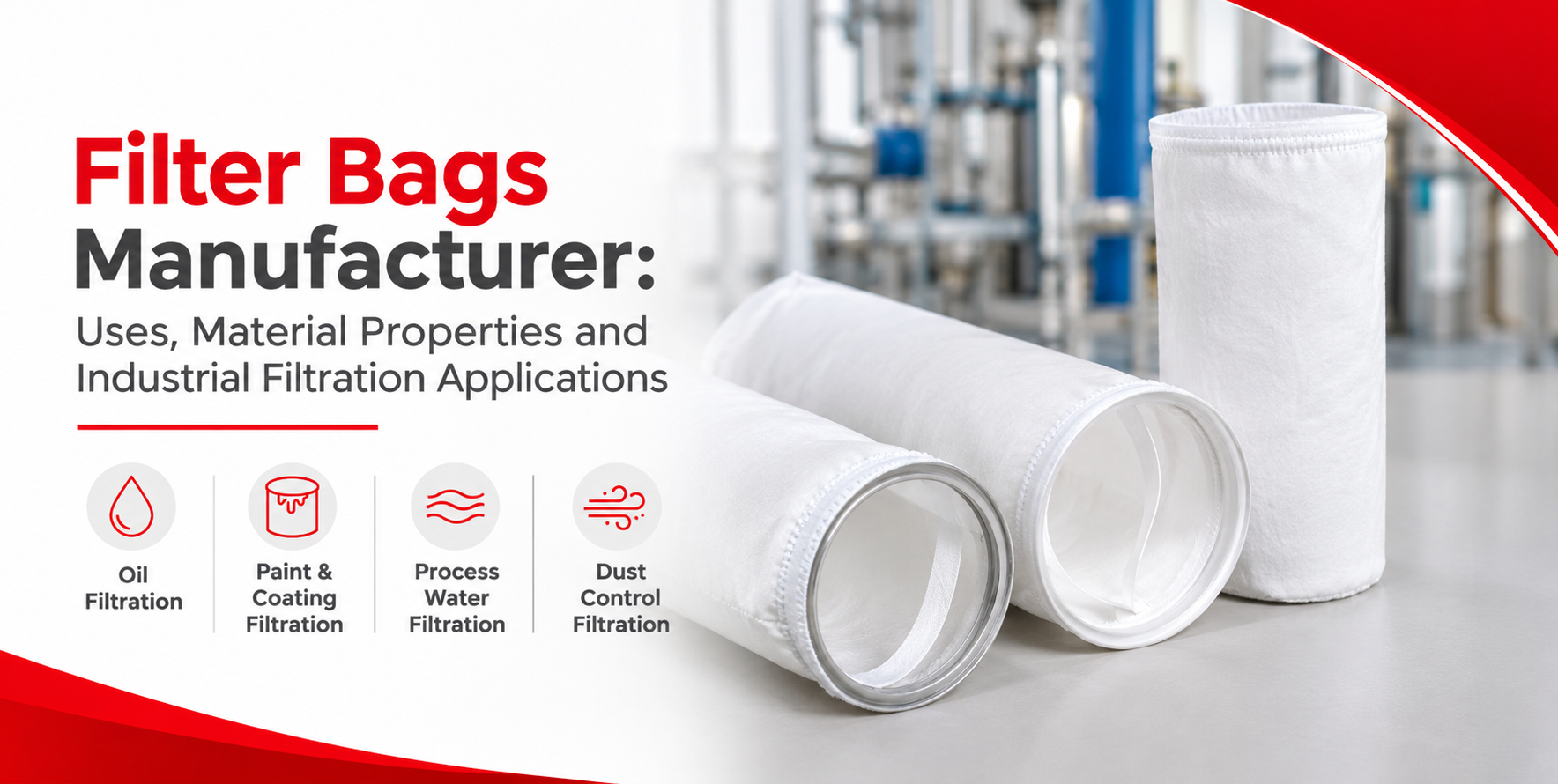
A filter bag is a fabric or felt sleeve that sits inside a filter housing. In liquid filtration, the fluid flows through the bag, the solids stay behind, and clean liquid passes out. Dust collector bags work on the same idea, but for air.
In the UAE, filter bags are commonly used in:
The same bag will not suit every liquid. The material decides what the bag can handle, so it is worth understanding the basics.
PP resists many acids, alkalis and solvents, which makes it a popular all-round choice. It typically handles temperatures up to about 90°C. Our PE/PP filter bags are a common starting point for general process liquids.
PE performs well with many water-based liquids and alkaline solutions. Its temperature limit is lower than PP, usually around 70°C, so it suits cooler processes better.
Nylon mono filament is a woven, single-strand mesh with a very consistent opening size. It is strong, handles abrasion well and can often be cleaned and reused. Our nylon filter bags are used where tough, consistent filtration is needed.
The top of the bag matters as much as the fabric. A poor seal lets unfiltered liquid bypass the bag entirely. Common options include steel ring bags, welded ring nylon bags, fully welded plastic ring bags and flange top bags. Welded designs avoid stitching, which removes the needle holes where particles can slip through.
Dubai’s summer heat affects more than your process. Warehouses and tanks can run hot, and some materials soften or age faster. Always check the bag’s temperature rating against your real operating conditions, not just room temperature.
Check what the bag will touch: the product, cleaning agents and any additives. A material that handles an oil perfectly may weaken in a strong acid or solvent.
The micron rating tells you the size of particle the bag can hold back. A finer rating gives cleaner output but clogs faster and slows flow. The aim is the coarsest rating that still meets your quality target.
For example, a lubricant blending plant might use a coarser nylon bag to protect pumps early in the line, then a finer PP bag before filling. Splitting the job this way often extends bag life.
Metro International LLC has served customers in the UAE since 1995. Our portfolio started with closures and packaging components for lubricants, edible oils, cleaning products, paints and more, so we understand the liquid-handling industries that rely on good filtration. Our Filtration Solutions range brings filter bags, cages and housings together under one supplier.
We keep the process simple. You share your liquid, temperature and filtration goal, and we help you narrow down suitable options. If you are unsure, the quickest route is to contact our team.
You can source them from industrial suppliers based in Dubai. Metro International LLC lists nylon mono filament, PE/PP and dust collector bags on its Liquid & Dust Filters page, and you can send an enquiry directly.
It depends on the oil, temperature and required cleanliness. PP and nylon mono filament are both common for oils and lubricants. Share your process details with us and we can suggest a suitable match.
PP is felt-style and traps fine particles through depth. Nylon mono filament is a woven mesh with a precise opening size, and it is often reusable after cleaning. The right choice depends on your liquid and your filtration target.
Yes, if the material’s temperature rating suits your process. PE, PP and nylon each have different limits, so check the rating against your actual operating and storage conditions.
Choose the coarsest rating that still meets your quality requirement. Going finer than necessary clogs bags faster and raises running costs.
Use the contact us page or call +971 4 221 4556 (Mon to Sat, 9am to 6pm). Include the bag type, size, material and approximate quantity.
Good filtration protects your equipment, your product and your schedule. Understanding materials, bag construction and operating conditions makes it much easier to choose well. A knowledgeable filter bags manufacturer will ask about your process first and recommend second.
If you are sourcing in Dubai or elsewhere in the UAE, Metro International LLC can help you compare options. Browse our filtration range or send us your requirements.