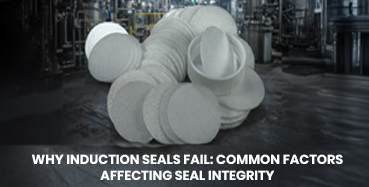
Induction sealing plays a critical role in modern packaging by ensuring product safety, freshness, and tamper evidence. From food and beverages to pharmaceuticals and chemicals, a strong induction seal protects the product throughout its lifecycle. However, induction seal failure is a common challenge faced by manufacturers and packers, often leading to leakage, contamination, customer complaints, and even costly recalls.
Understanding why induction seals fail is the first step toward preventing these issues. In this blog, we explore the factors affecting induction sealing, common failure points, and best practices to maintain consistent seal integrity.
Seal integrity refers to the strength, uniformity, and reliability of the bond formed between the induction liner and the container mouth. A proper seal ensures that the foil liner adheres evenly to the container, creating a leak-proof and tamper-evident barrier.
When seal integrity is compromised, induction seal failure occurs resulting in loose liners, partial bonding, or complete detachment. This not only affects product quality but also damages brand credibility.
One of the most common factors affecting induction sealing is improper machine settings.
Finding the right balance of power, sealing time, and conveyor speed is essential to avoid induction seal failure.
Not all liners work with all containers. A mismatch between the liner material, cap type, and bottle (HDPE, PET, glass, or PP) can severely impact seal performance. Incompatibility is a major contributor among the factors affecting induction sealing, especially in high-speed production lines.
Incorrect torque application leads to uneven pressure on the liner.
Both scenarios significantly increase the risk of induction seal failure.
Using substandard liners or liners not designed for the specific product can compromise seal integrity. For example, moisture-sensitive or oil-based products require specialised liners. Many brands sourcing from EPE Induction wads manufacturers in UAE focus on selecting liners suited to their container and product type to reduce sealing issues.
Improper storage of liners, such as exposure to humidity or heat, also falls under critical factors affecting induction sealing.
Even the best liner cannot compensate for a poorly moulded bottle. Uneven, warped, or damaged container mouths prevent uniform sealing. Minor defects in the neck finish are often overlooked but are a silent cause of repeated induction seal failure.
Early detection can prevent large-scale losses. Common warning signs include:
Each of these is a clear indicator of induction seal failure.
To maintain consistent seal quality:
Addressing these factors affecting induction sealing proactively can significantly reduce failure rates.
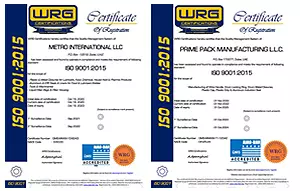
Unlike many suppliers in the market, Metro International L.L.C focuses on delivering complete, application-specific induction sealing solutions rather than generic products. Their approach emphasises quality consistency, technical expertise, and customer support helping brands minimise induction seal failure across diverse industries.
What truly differentiates Metro International L.L.C is its deep understanding of packaging challenges, rigorous quality standards, and commitment to helping clients select the right induction liners based on container material, product formulation, and production conditions. This ensures reliable seal integrity, reduced downtime, and long-term cost efficiency for manufacturers.
Induction seal failure is rarely caused by a single issue. It is usually the result of multiple interconnected problems from incorrect sealing parameters to material incompatibility and equipment issues. By understanding and controlling the factors affecting induction sealing, manufacturers can protect product quality, enhance consumer trust, and avoid costly recalls.
Partnering with an experienced and quality-driven supplier like Metro International L.L.C can make a significant difference in achieving reliable, high-performance induction seals that stand up to real-world packaging demands.