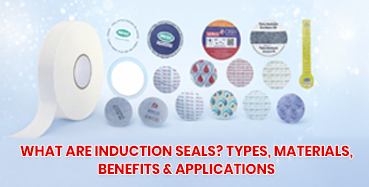
In today’s competitive packaging landscape, product safety, freshness, and tamper protection are no longer optional; they are expected. This is where Induction Seals play a critical role. From food and pharmaceuticals to cosmetics and chemicals, induction sealing has become a trusted solution for ensuring leak-proof, tamper-evident packaging across industries.
Induction Seals are a type of sealing solution used inside caps or closures to hermetically seal containers. They use electromagnetic induction to bond a foil-based liner to the container’s rim, creating a secure and airtight seal. Once sealed, the liner must be peeled or punctured, making any tampering immediately visible.
Unlike traditional liners, Induction Seals do not rely on adhesives or pressure alone. Instead, they provide a controlled, high-integrity seal that protects products from leakage, contamination, and external environmental factors.
The induction sealing process involves placing a foil liner inside the cap, which is then applied to the container. When the container passes under an induction sealing machine, electromagnetic energy heats the foil layer. This heat activates the polymer coating, bonding it permanently to the container’s mouth
Once sealed, the foil remains attached even after the cap is removed, offering clear tamper evidence. This process is widely used with induction sealing liners because of their reliability and consistency in high-speed packaging environments.
Most Induction Seals are made up of multiple layers, each serving a specific purpose:
Together, these layers ensure a strong, leak-proof seal suitable for various container materials.
These seals bond entirely to the container after induction sealing. They are ideal for products requiring maximum security and are commonly used in pharmaceuticals and food packaging.
This type leaves a backing liner inside the cap after the foil is removed. Two-piece seals are preferred when resealing convenience is important.
Designed for products that release gas or pressure, vented seals allow airflow while preventing leakage.
These seals clearly show whether a package has been opened, making them essential for consumer safety and regulatory compliance.
Induction sealing liners are manufactured using materials selected based on container type and product compatibility. Common materials include:
These materials are compatible with containers made from HDPE, PET, glass, and PP, ensuring flexibility across industries. High-quality induction sealing liners also enhance shelf life by providing superior barrier protection.
The popularity of Induction Seals is driven by their wide-ranging benefits:
Because of these advantages, many brands source solutions from reliable epe Induction wads manufacturers in UAE to meet both performance and regulatory expectations.
Induction Seals are used across multiple sectors, including:
In each of these applications, induction sealing liners help maintain product integrity from the factory to the end consumer.
What sets Metro International L.L.C. apart from other packaging solution providers is its strong focus on quality, customisation, and technical expertise. Unlike generic suppliers, Metro International L.L.C. offers precision-engineered induction sealing solutions tailored to specific container materials, product types, and industry requirements.
With strict quality control processes, advanced manufacturing standards, and a deep understanding of regional and international packaging regulations, the company ensures consistent performance across every batch. Their ability to support clients with technical guidance and reliable after-sales service makes them a preferred choice in the competitive packaging market.As packaging standards continue to evolve, Induction Seals remain a vital component in ensuring safety, freshness, and brand trust. From their advanced sealing mechanism to their versatility across industries, they offer unmatched reliability for modern packaging needs.
Choosing the right induction seal and supplier can make a significant difference in product performance and customer satisfaction. With its commitment to quality, innovation, and customer-centric solutions, Metro International L.L.C. remains a trusted name for businesses seeking dependable induction sealing solutions.