BLOG

BLOG

Home  |  Blogs

Nylon Monofilament Filter Bags

November 12, 2026

Nylon Monofilament Filter Bags for UAE Industries

Industrial filtration plays an important role in maintaining product quality and supporting smooth manufacturing operations. Businesses dealing with lubricants, paints, edible oils and other industrial liquids need effective filtration to remove unwanted particles before they affect the final product or processing equipment.

Selecting the right filter material is therefore an important purchasing decision. Nylon Monofilament Filter Bags are commonly used in liquid filtration because their woven mesh structure provides defined openings for retaining solid particles while allowing liquids to pass through.

For manufacturers and industrial businesses in Dubai and across the UAE, understanding their construction, applications and specifications can help identify the right filtration solution. Let's explore how these filter bags are manufactured and what makes them suitable for different industrial requirements.

Nylon Monofilament Filter Bags: Manufacturing, Applications and Filtration Benefits

What Are Nylon Monofilament Filter Bags?

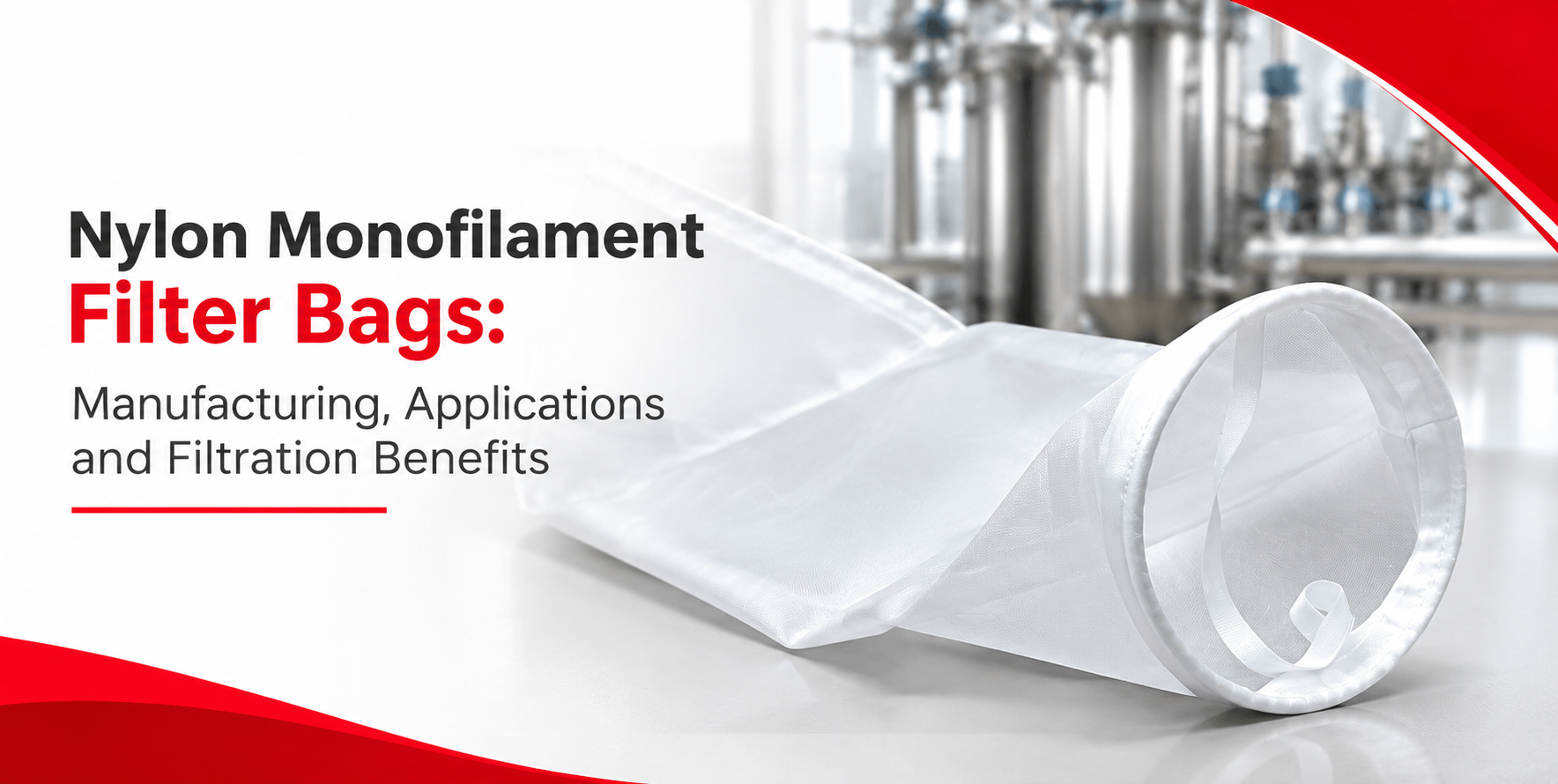
Nylon monofilament filter bags are manufactured using a woven mesh made from individual nylon filaments. Unlike multifilament materials, which contain several smaller fibres grouped together, monofilament mesh uses single continuous strands.

These strands form a uniform mesh structure with clearly defined openings. This allows the filter bag to retain particles according to its selected micron rating while permitting the filtered liquid to flow through.

One of the important characteristics of this material is surface filtration. Contaminants are primarily collected on the surface of the mesh rather than becoming deeply embedded within the material. Depending on the application, this can make cleaning and inspection more practical.

Why Nylon Monofilament Filter Bags Matter in Industrial Filtration

Different manufacturing processes require different levels of liquid cleanliness. Even small unwanted particles can affect product appearance, processing quality or downstream equipment.

Here are some important benefits of using nylon mesh filtration.

1. Consistent Particle Retention

The woven mesh structure provides defined openings that help retain unwanted particles. Businesses can select a suitable micron rating according to their filtration requirements.

2. Suitable for Multiple Liquid Applications

Nylon monofilament mesh is used in several industrial liquid filtration applications, including lubricants, paints and edible oils. Material compatibility should always be checked before selecting a filter bag.

3. Practical Cleaning and Maintenance

Since particles are mainly retained on the mesh surface, certain filter bags can be cleaned and reused. Their suitability for reuse depends on the contaminants, cleaning procedure and condition of the mesh.

4. Support for Product Quality

Removing suspended particles helps maintain the required cleanliness of industrial liquids. This is particularly useful when filtration forms an important part of a manufacturing or processing operation.

Key Factors to Consider When Selecting Filter Bags

Choosing a filter bag involves more than simply selecting a material. The product must match the filtration system and the liquid being processed.

Micron Rating

Micron rating indicates the approximate particle size that a filter mesh is designed to retain. A finer mesh can capture smaller particles but may also restrict liquid flow more than a coarser mesh.

For example, Metro International offers nylon monofilament filter bags with steel rings in micron ratings ranging from 35 to 1000 microns. Buyers should select the rating based on the required filtration level and operating conditions.

Material Compatibility

Nylon is suitable for various applications, but its compatibility depends on the liquid's chemical composition and operating temperature.

Businesses handling paints, lubricants or specialised industrial liquids should confirm material suitability before purchasing.

Ring Type and Bag Dimensions

The filter bag must fit properly inside the filtration housing. Incorrect dimensions or an unsuitable ring configuration may affect sealing and filtration performance.

Common considerations include:

  • Stainless steel ring construction
  • Welded ring construction
  • Required bag diameter and length
  • Compatibility with the existing filtration equipment

Businesses can also explore nylon mesh filter bags with welded ring construction when comparing available product configurations.

Flow Rate and Operating Conditions

The filtration system's flow rate, operating pressure and contaminant load should be considered before selecting a filter bag.

An unsuitable mesh rating may restrict liquid flow or require more frequent cleaning. Checking compatibility with the existing industrial filter housing can help businesses make a more informed selection.

Manufacturing Process of Nylon Monofilament Filter Bags

The manufacturing process influences the consistency, construction and functionality of the finished filter bag. Although specific production methods can vary, the general stages include:

1. Nylon Filament Preparation: Individual nylon filaments are prepared according to the required material specifications.

2. Mesh Weaving: The filaments are woven together to create a structured mesh. The weaving pattern determines the opening size and uniformity.

3. Cutting and Shaping: The woven material is cut according to the required bag diameter and length.

4. Joining and Finishing: The material is joined to form the filter bag. Depending on the design, seams may be stitched or welded.

5. Ring Attachment: A suitable ring is fitted to the opening. Steel and welded ring configurations are available for different product designs.

6. Quality Inspection: The finished bag should be checked for dimensions, mesh consistency, seam quality and ring fit.

These manufacturing stages help explain why buyers should pay attention to product specifications rather than choosing filter bags based on price alone.

Industrial Applications Across Dubai and the UAE

Dubai has a diverse industrial and commercial environment, with businesses involved in manufacturing, lubricant processing, paints, food processing and other liquid-based operations.

Nylon monofilament filter bags can be considered for several applications, depending on their specifications and compatibility.

  • Lubricant filtration: Helps retain unwanted solid particles during lubricant processing and handling.
  • Paint filtration: Helps remove suspended particles that may affect paint quality and finish.
  • Edible oil filtration: Supports the removal of suspended impurities during suitable oil-processing stages.
  • Industrial liquid processing: Provides particle retention for different liquid filtration requirements.

The appropriate micron rating and bag construction should always be selected according to the actual application.

How Metro International Supports Industrial Filtration Requirements

When sourcing filtration products in the UAE, businesses need to consider product specifications, material compatibility and supply requirements.

Established in the UAE in 1995, Metro International LLC offers a range of industrial filtration solutions for different industrial applications.

Its product range includes nylon monofilament filter bags with steel rings and welded rings, PE and PP filter bags, dust collector bags and filter housing solutions.

The nylon filter bag range includes options for lubricant, paint and edible oil filtration. The steel ring variant is available in micron ratings from 35 to 1000 microns, with different bag sizes.

Businesses can review the available product specifications and discuss their requirements with the Metro International team before selecting a suitable filtration product.

Frequently Asked Questions

1. What are nylon monofilament filter bags used for?

They are used to remove suspended solid particles from liquids. Common applications include lubricant, paint and edible oil filtration, depending on the product specifications and operating conditions.

2. Which micron rating is suitable for industrial filter bags?

The right micron rating depends on the size of particles that need to be retained, the required liquid cleanliness and the system's flow rate. A filtration supplier can help identify a suitable specification.

3. Where can I buy nylon monofilament filter bags in Dubai?

Industrial buyers can approach filtration suppliers such as Metro International LLC in the UAE. Before purchasing, confirm the micron rating, bag dimensions, ring type and application compatibility.

4. What is the difference between monofilament and multifilament filter bags?

Monofilament filter bags use individual continuous filaments woven into a mesh with defined openings. Multifilament bags use multiple smaller fibres grouped together. Monofilament mesh is generally preferred where uniform mesh openings and surface filtration are required.

5. Can nylon monofilament filter bags be reused?

Some nylon monofilament filter bags can be cleaned and reused, depending on the type of contaminants, cleaning method and condition of the mesh. Reuse should only be considered when the bag maintains its filtration performance and structural integrity.

6. How do I choose a filter bag supplier in the UAE?

Consider suppliers that provide clear product specifications, different micron ratings, suitable ring configurations and application-related guidance. Also confirm compatibility with your existing filtration system before placing an order.

Conclusion

Choosing the right filtration product requires attention to several factors, including micron rating, mesh construction, material compatibility, bag dimensions and ring design. Understanding these specifications can help businesses maintain suitable filtration conditions across their manufacturing processes.

For industrial buyers exploring Nylon Monofilament Filter Bags in Dubai and across the UAE, Metro International offers different product configurations as part of its filtration solutions range.

To discuss product specifications, filtration requirements or suitable configurations, contact Metro International for industrial filtration requirements.


© copyright www.metrointl.net | 2026
All Rights Reserved