Choosing the right packaging closure is not only about finding a product that fits a container. The closure needs to work with the packaging format, protect the contents, support the filling process, and perform consistently during storage and transport.
For businesses sourcing packaging components in the UAE, choosing the right metal closure manufacturer UAE can make a noticeable difference. A reliable manufacturer can help buyers find suitable closure options, maintain consistent quality, and manage supply requirements more effectively.
But with different closure types, applications, and specifications available, what should packaging buyers actually look for?
Metal closures play an important role in packaging performance. A closure that does not match the container properly can create problems with sealing, handling, filling, or product protection.
Working with an experienced manufacturer gives buyers an opportunity to discuss their packaging requirements before selecting a closure. This can be particularly useful when the packaging is being produced in large quantities or when a specific closure design is required.
Instead of choosing a closure based only on appearance or price, buyers should consider the manufacturer's production capabilities, quality practices, product range, and ability to meet their specific requirements.
A good manufacturer should have experience with different types of metal closure components and packaging formats.
Depending on the application, buyers may need options such as:
A wider product range makes it easier to find a suitable solution without having to work with several different suppliers for related packaging components.
Consistency is one of the most important factors when sourcing packaging components.
When closures are purchased in bulk, every piece should meet the required specifications. Small variations in dimensions, finish, or fit can create problems when closures are used with automated packaging or filling equipment.
When evaluating a metal closure manufacturer UAE, ask about how production quality is maintained across different batches. Consistent manufacturing can help reduce unnecessary production interruptions and quality concerns.
The material and finish of a closure should suit the packaging application.
Different products may have different requirements depending on what they contain and how they are stored or transported. Food products, lubricants, chemicals, and industrial products may require different closure characteristics.
The finish can also influence the appearance of the final package. For branded packaging, printed or embossed closures may provide an additional way to maintain product identity.
It is useful to discuss the product, container, storage conditions, and intended use with the manufacturer before finalising the closure specification.
A closure should not be selected separately from the container.
The dimensions, neck design, opening, sealing area, and overall container construction all need to be considered. Even a high-quality closure may not perform properly if it is not compatible with the container.
Before placing an order, packaging buyers should share accurate container specifications with the manufacturer. This gives the manufacturer the information needed to recommend or produce the appropriate closure.
Not every packaging project can use a standard closure.
Some businesses may require specific dimensions, finishes, designs, printing, or embossing to match their packaging requirements.
Customisation can be particularly useful for companies that want their packaging to have a consistent brand appearance. It can also help when a particular container design requires a closure that is not available as a standard option.
A manufacturer with suitable production capabilities can discuss these requirements early and help determine what can be produced efficiently.
Production capacity becomes especially important when ordering closures in large quantities.
A manufacturer may be able to supply a sample or small order, but buyers also need to consider whether the manufacturer can handle regular commercial volumes.
Ask about:
Understanding these details before placing an order can make procurement planning much easier.
Quality control should be part of the manufacturing process rather than something considered only after a problem occurs.
Buyers should understand how the manufacturer checks closure dimensions, finish, fit, appearance, and other relevant specifications.
For larger packaging operations, consistent quality can help prevent issues further down the production line. It is also worth discussing the inspection process when ordering customised or printed components.
The right closure can depend heavily on the application.
For example, packaging used for food may have different requirements from packaging used for lubricants or industrial products. A manufacturer familiar with different applications can better understand the practical considerations involved.
Ask whether the manufacturer has experience supplying closures for your type of packaging. This can provide useful context when discussing specifications and production requirements.
Packaging delays can affect more than just the purchasing department. If closures are unavailable when needed, filling, packing, and dispatch schedules may also be affected.
Before choosing a manufacturer, discuss expected lead times and how repeat orders are handled.
A clear understanding of production and delivery timelines helps businesses plan their inventory and avoid last-minute sourcing problems.
Good communication is often overlooked when comparing packaging manufacturers.
A manufacturer should be able to clearly discuss specifications, quantities, customisation requirements, production timelines, and other important details.
If there are technical limitations or changes required, these should be communicated before production begins.
For buyers, having one clear point of communication can make the entire sourcing process easier, particularly when ordering customised closure components.
The more accurate information a buyer provides, the easier it is to identify the right closure.
Before requesting a quotation or discussing production, it can help to prepare:
Providing these details early can reduce unnecessary back-and-forth and help the manufacturer understand the project more clearly.
For packaging businesses, choosing a manufacturer is about more than purchasing a single component. The manufacturer should be able to understand the application, maintain production consistency, and support the required specifications.
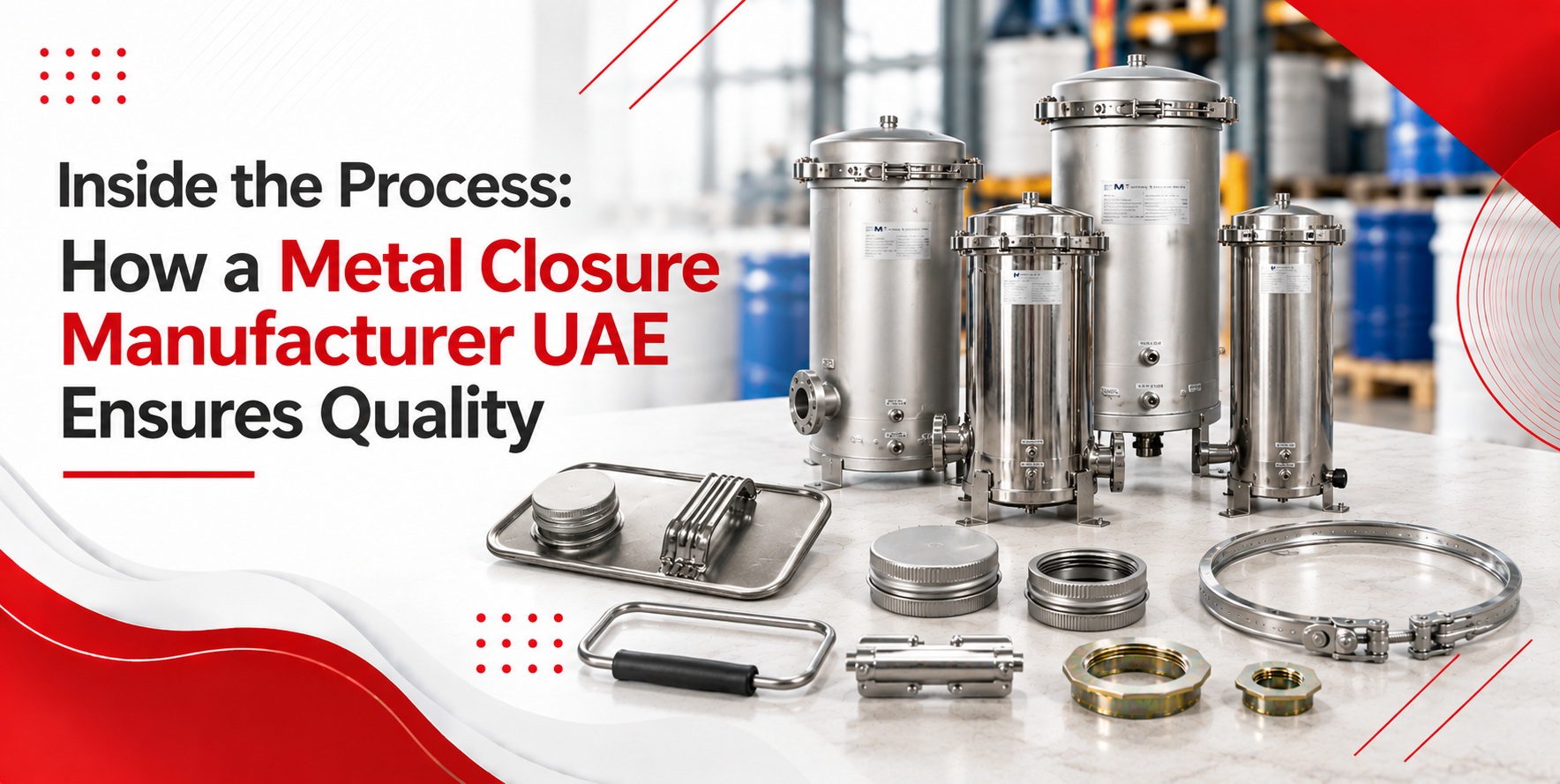
Metro International supplies a range of metal closure components for packaging applications across food, lubricant, chemical, and industrial sectors. Its product range includes bungs, peel-off ends, easy-open ends, bottom ends, double tight components, bridge handles, neck sets, cap seals, flanges, ring lids with taggers, and printed or embossed cap seals.
For businesses sourcing closures in the UAE, discussing the container design, product application, quantity, and required specifications with the manufacturer can help create a more suitable packaging solution.
A metal closure manufacturer produces components used to seal or close different types of packaging. These may include bungs, cap seals, easy-open ends, peel-off ends, ring lids, and other metal closure components.
Consider the container design, product type, closure dimensions, sealing requirements, opening method, filling process, and storage conditions. The manufacturer can also help confirm compatibility.
Yes, depending on the manufacturer and production capabilities. Customisation may include specific dimensions, finishes, printing, or embossing requirements.
Consistent dimensions and quality help closures fit and perform as expected across production batches. This is particularly important for businesses using large quantities or automated packaging processes.
Share details such as container specifications, product type, required quantity, closure dimensions, application, finish, and any printing or embossing requirements. Samples or technical drawings can also be useful where available.
Finding the right metal closure manufacturer UAE involves looking beyond product availability and price. Manufacturing consistency, product range, container compatibility, quality control, customisation options, production capacity, and supply reliability all deserve attention.
A manufacturer that understands the practical requirements of your packaging can make the sourcing process more straightforward and help you select closure components that suit your application.
For businesses purchasing metal closures in the UAE, taking the time to discuss technical requirements and supply expectations before placing an order can help create a smoother and more reliable packaging process.