Choosing the right packaging supplier can have a direct impact on production, product protection, and day-to-day operations. This is especially true when a business depends on closures to keep its containers properly sealed during storage and transportation.
For companies searching for a metal closure supplier UAE, the decision should go beyond price. Product quality, closure compatibility, available options, customisation, supply capacity, and technical support can all influence whether a supplier is suitable for a particular packaging requirement.
Taking the time to assess these factors can help businesses find a supplier that fits their packaging needs and supports consistent sourcing over time.
Metal closures may be small components, but they perform an important role in packaging. They help seal containers and can contribute to product protection during storage, handling, and transportation.
A supplier that understands different packaging applications can make it easier to identify the right closure for a particular container and product.
This becomes especially important for businesses working with food, lubricants, chemicals, and industrial products, where packaging requirements can vary significantly.
A reliable supplier should offer a range of closure options rather than being limited to one standard design.
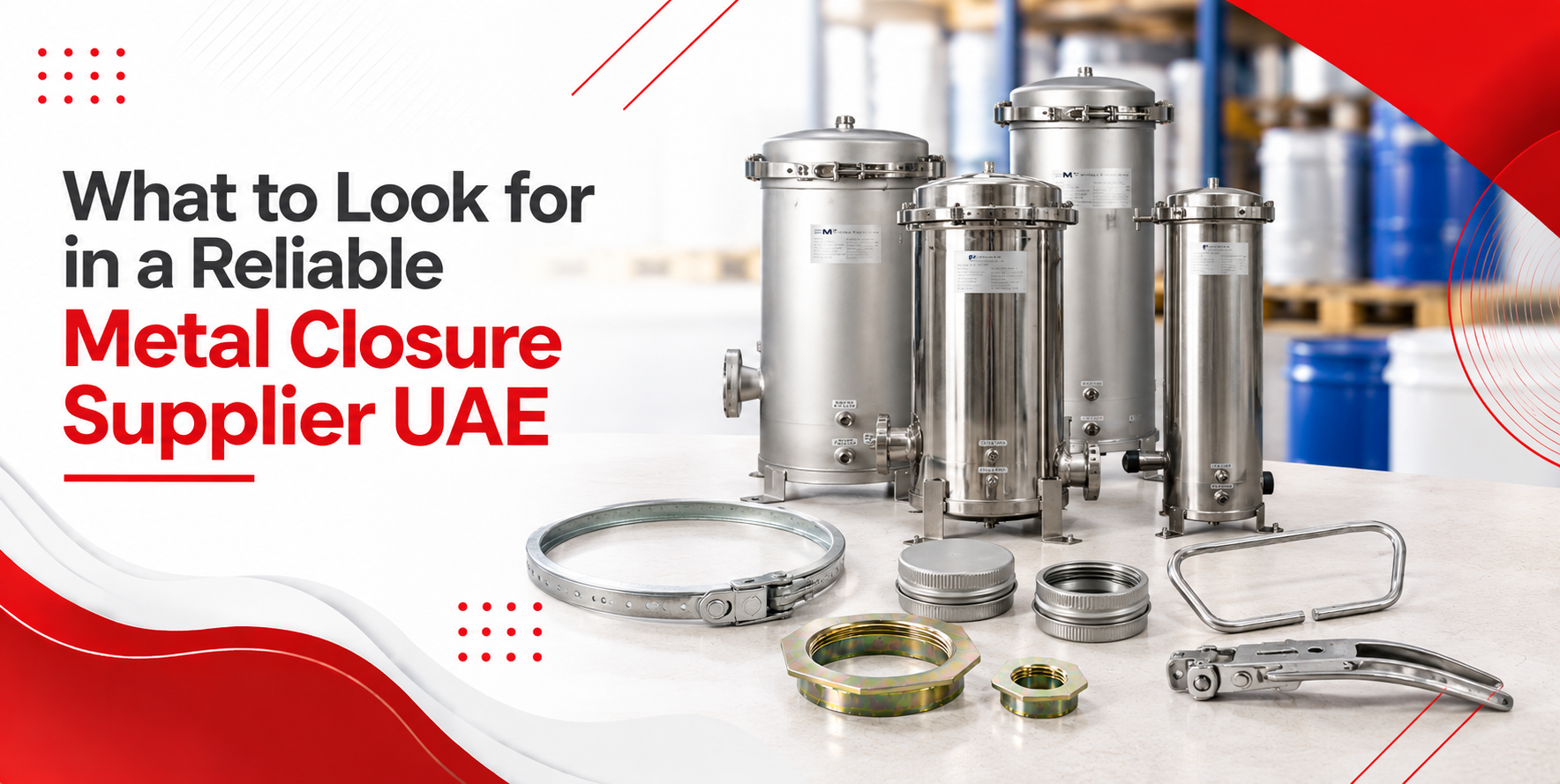
Depending on the packaging application, businesses may need bungs, peel-off ends, easy-open ends, bottom ends, cap seals, neck sets, flanges, ring lids, or other specialised components.
A broader product range gives buyers more flexibility when selecting a closure that matches their container and application.
Quality is one of the most important factors when sourcing packaging components in volume.
Closures should be manufactured consistently so that they fit and perform as expected across the production process. Variations in dimensions or specifications can create unnecessary problems during filling and sealing.
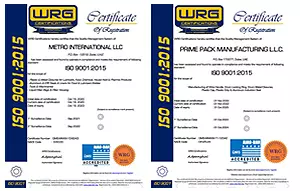
Before selecting a supplier, businesses should understand the supplier's approach to product quality and consistency.
Not every closure will work with every container. The opening size, neck design, dimensions, material, and fitting method all need to be considered.
A good metal closure supplier UAE should be able to understand these requirements and help buyers identify suitable options.
Providing accurate container specifications at the beginning can make this process much easier.
The product being packaged should always be part of the discussion.
Food products, lubricants, chemicals, and industrial materials may require different closure configurations. Storage conditions, transportation requirements, and how the package will eventually be opened can also influence the selection.
Rather than simply asking for a closure by name, explain the complete packaging application to the supplier.
Some businesses require more than a standard closure. They may need printed elements, embossed details, specific dimensions, or a particular design.
For example, printed and embossed cap seals can be useful when packaging needs product identification or branding elements.
If customisation is important to your business, check whether the supplier can provide the required options before moving forward.
A closure supplier may provide the right product, but businesses also need to consider whether the supplier can support their required order volumes.
This is particularly important for manufacturers and distributors purchasing closures regularly.
Before placing an order, discuss expected quantities, delivery schedules, production requirements, and future demand. This can help establish whether the supplier is equipped to support ongoing requirements.
Packaging delays can affect production schedules. If closures are not available when needed, businesses may have to adjust filling or dispatch plans.
For this reason, it is useful to understand the supplier's typical lead times and delivery process.
Businesses operating in different parts of the UAE may also want to consider how efficiently the supplier can manage deliveries to their location.
Good communication can make packaging sourcing much easier.
A supplier should be able to understand the buyer's requirements, answer questions clearly, and provide relevant information about product specifications, quantities, and availability.
Clear communication is particularly useful when a business is working on a new packaging format or needs a customised closure.
Experience with different packaging applications can be valuable when selecting a closure supplier.
A supplier familiar with food, lubricant, chemical, and industrial packaging may have a better understanding of the different requirements involved in these sectors.
This does not mean every business needs the same type of supplier. Instead, buyers should look for experience that is relevant to their own packaging application.
Choosing a supplier is not only about completing one order. Businesses that use closures regularly may benefit from building a dependable supply relationship.
A supplier that understands the packaging specifications and requirements can make future orders easier to manage.
Long-term communication can also be useful when a company changes its container design, increases production, or introduces a new product.
Before finalising a metal closure supplier UAE, packaging buyers can ask a few practical questions:
Getting clear answers to these questions can make the sourcing process more transparent.
The more accurate the information provided to a supplier, the easier it is to identify suitable closure options.
Before making an enquiry, prepare details such as:
If possible, product drawings, samples, photographs, or technical specifications can also help communicate the packaging requirements more clearly.
Metro International provides metal closure components for a range of packaging applications across food, lubricant, chemical, and industrial sectors.
Its product range includes bungs, peel-off ends, easy-open ends, bottom ends, DT components, bridge handles, neck sets, cap seals, flanges, and ring lid and tagger components.
The company also offers printed and embossed cap seal options for applications where additional product identification or branding may be required.
For businesses sourcing closures in the UAE, discussing the container, product, and intended application with the supplier can help identify a suitable closure configuration.
Look at the supplier's product range, quality standards, closure compatibility, customisation options, supply capacity, lead times, communication, and experience with your type of packaging.
Depending on the supplier, options may include bungs, easy-open ends, peel-off ends, bottom ends, cap seals, neck sets, flanges, and ring lids.
Some suppliers offer options such as printing, embossing, specific dimensions, and other configurations. Availability depends on the closure type and project requirements.
Provide the container dimensions, opening size, product type, filling and sealing method, expected quantity, storage requirements, and any customisation needs.
A compatible closure should fit the container correctly and support the required sealing process. Confirming compatibility can help prevent problems during production and transportation.
Local supply can make communication, logistics, and delivery coordination easier for businesses operating in the UAE. The importance depends on the company's location, order volume, and delivery requirements.
Finding the right metal closure supplier UAE involves more than comparing prices. Businesses should consider product quality, compatibility, product range, customisation, supply capacity, lead times, communication, and relevant industry experience.
Before placing an order, provide the supplier with accurate information about the container, product, filling process, and intended use. This gives both sides a clearer understanding of the requirement.
Metro International offers a range of metal closure solutions for food, lubricant, chemical, and industrial packaging applications. For businesses looking for closure components in the UAE, discussing the complete packaging requirement can help identify an option suited to the container and application.