Choosing the right packaging closure may seem like a small decision, but it can have a direct impact on how a product is stored, transported, sealed, and used. The closure needs to work properly with the container while also meeting the requirements of the product inside.
For businesses sourcing metal closures Dubai, there are several factors to consider before placing an order. Container size, opening design, product type, sealing requirements, filling methods, and end-user convenience can all influence which closure is suitable.
A clear understanding of these factors can make the buying process easier and help businesses avoid compatibility issues later.
Metal closures are components used to seal and protect packaging containers. They are available in different shapes, sizes, and configurations to suit different packaging applications.
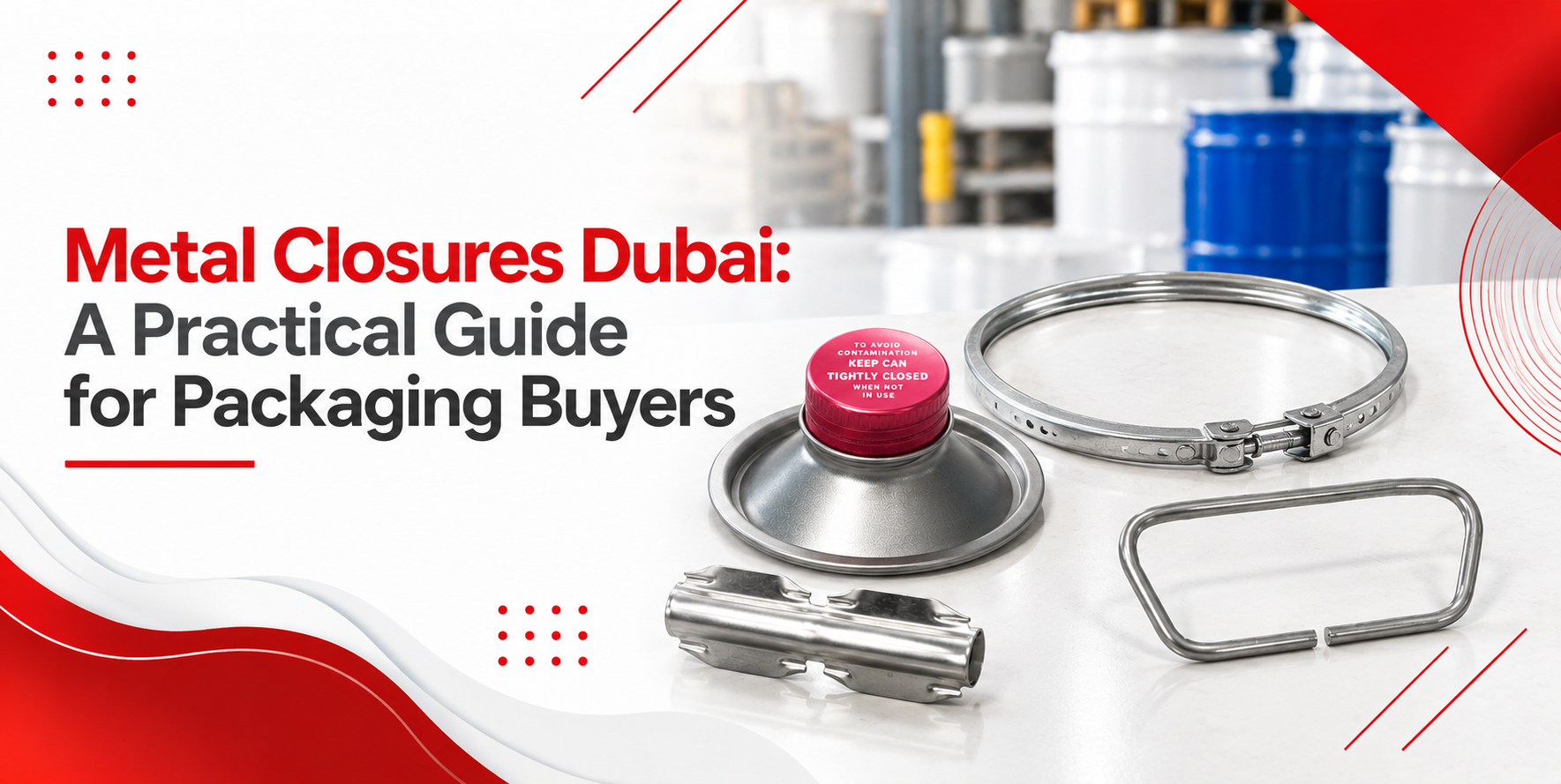
Depending on the container and product, options may include bungs, peel-off ends, easy-open ends, bottom ends, cap seals, neck sets, flanges, ring lids, and other specialised components.
The right closure is not necessarily the one that looks most suitable. It needs to match the container and perform properly throughout filling, storage, transportation, and use.
A closure is an important part of the overall packaging system. Even when the container itself is well designed, an unsuitable closure can create problems during production or transportation.
One of the main functions of a closure is to help protect the contents of the container. A suitable closure can support secure sealing and reduce the risk of leakage or unwanted exposure.
This is particularly important for products such as lubricants, chemicals, food products, and other materials that require appropriate packaging protection.
Packaging often travels through warehouses, distribution centres, and transportation networks before reaching its final destination.
During this time, containers may be moved, stacked, loaded, or unloaded several times. The closure should therefore be appropriate for the container and expected handling conditions.
The way a package is opened also matters. Some products may require quick and convenient access, while others may need a more secure closure.
Easy-open ends, peel-off ends, bungs, and cap seals can be considered depending on how the finished package will be used.
Different packaging requirements call for different closure designs. Understanding the available options can help buyers have a more productive discussion with their supplier.
Bungs are commonly used where a secure opening and closing mechanism is required. They can be suitable for specific industrial containers and applications where controlled access to the contents is important.
Easy-open ends are designed to make opening more convenient. They may be suitable for packaging where the end user needs straightforward access without requiring additional tools.
Peel-off ends provide another opening option and can be selected based on the container design and product application.
Cap seals can be used to support sealing around a container opening. Printed or embossed versions may also be considered when packaging requires branding or product identification.
Ring lids, neck sets, flanges, bridge handles, and other components can serve specific packaging requirements. The appropriate option depends on the container design and how the finished package will be handled.
Before selecting metal closures Dubai, buyers should look beyond price and availability. The closure needs to fit the complete packaging application.
Start by confirming the container size, opening diameter, neck configuration, and closure fitting method.
Accurate dimensions are important because even a small mismatch can affect fitting and sealing.
The material being packaged should also be considered. Food products, lubricants, chemicals, and industrial products may have different packaging requirements.
Sharing details about the product with the supplier can help narrow down the available options.
Consider how the package will be stored and transported. If the product needs to remain securely contained throughout transportation, the closure should be selected accordingly.
The sealing requirements should always be considered together with the container and product.
Think about what happens after the package reaches the end user.
Will it be opened once? Will it need to be accessed repeatedly? Does it need a simple opening mechanism?
These questions can help determine whether an easy-open end, bung, cap seal, or another option is appropriate.
The closure should also work with the existing filling and sealing equipment. Businesses using established production lines may need closures that match specific fitting methods or machine requirements.
Discussing the filling process with the supplier before ordering can help prevent avoidable production problems.
Businesses purchasing closures in bulk should consider their expected order volume and production schedule.
Providing accurate quantity requirements can help suppliers understand the scale of the project and discuss suitable sourcing options.
Metal closures can be used across a variety of packaging sectors, but the exact closure depends on the application.
Food packaging may require a closure that works effectively with the selected container and filling system. Ease of opening and secure sealing can both be important considerations.
Lubricant containers need packaging that can support safe storage and transportation. Closure selection should take the container design, product requirements, and handling conditions into account.
Chemical products may require carefully selected packaging components based on the product characteristics and intended storage conditions. Closure compatibility should therefore be confirmed before production.
Industrial products can involve a wide range of container types and applications. Buyers may need specialised closure components depending on the size, design, and intended use of the packaging.
Packaging buyers can save time by preparing the necessary information before approaching a supplier.
Useful details include:
Instead of simply asking for a particular closure by name, explain how the packaging will be used. This gives the supplier a clearer picture of the application and makes it easier to identify suitable options.
The right supplier can do more than simply provide packaging components. They can help buyers understand which closure options may work with a particular container and application.
This is especially useful for businesses that are ordering closures for the first time or changing their packaging design.
Metro International offers a range of metal closure components for food, lubricant, chemical, and industrial packaging applications. Its product range includes bungs, peel-off ends, easy-open ends, bottom ends, DT components, bridge handles, neck sets, cap seals, flanges, and ring lid and tagger components.
For businesses sourcing packaging components in Dubai and across the UAE, discussing the complete packaging requirement with the supplier can make the selection process more straightforward.
Metal closures are used to seal and protect packaging containers. They can be used for food, lubricant, chemical, and various industrial packaging applications.
Consider the container dimensions, opening size, product type, sealing requirements, filling process, storage conditions, and preferred opening method before selecting a closure.
Depending on the application, buyers can choose from options such as bungs, easy-open ends, peel-off ends, cap seals, bottom ends, flanges, neck sets, and ring lids.
Some closure types can be supplied with features such as printing or embossing. Customisation options depend on the specific closure and packaging requirements.
Provide details such as the container dimensions, opening size, product type, filling method, sealing requirements, order quantity, and any printing or customisation needs.
A closure needs to fit the container correctly to support proper sealing and smooth packaging operations. Checking compatibility before ordering can help prevent fitting and production issues.
Choosing packaging closures involves more than finding a component that fits the container. Buyers also need to consider the product, sealing requirements, filling process, storage conditions, transportation, and how the package will be opened.
For businesses sourcing metal closures Dubai, having accurate container specifications and clearly explaining the packaging application can make the selection process much easier. With options available for food, lubricant, chemical, and industrial applications, the right closure can be selected based on the specific requirements of the packaging system.