In industrial manufacturing, filtration is much more than a routine process—it is a critical step that protects equipment, ensures product quality, and keeps production running efficiently. Whether you're working with chemicals, paints, food products, pharmaceuticals, or water treatment systems, choosing the right filter can significantly impact your operational performance.
However, selecting an Industrial Filter Bag isn't as simple as choosing the first option available. Every application has unique requirements, from the type of liquid being filtered to the size and quantity of contaminants present. A filter that performs exceptionally well in one process may not be suitable for another.
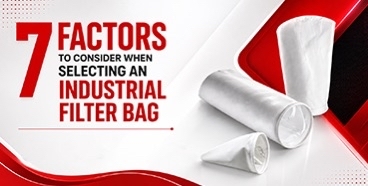
Making the right choice can reduce downtime, lower maintenance costs, improve filtration efficiency, and extend the life of your equipment. In this guide, we'll explore seven essential factors every business should evaluate before investing in an industrial filtration system.
The first step in selecting the right filter is identifying what needs to be removed.
Some industrial processes contain large suspended particles, while others deal with extremely fine contaminants that are difficult to capture. Understanding the size, shape, and concentration of these particles helps determine the most suitable filtration media.
A properly selected Industrial Filter Bag ensures contaminants are effectively captured without unnecessarily restricting liquid flow.
Micron rating refers to the size of particles a filter can remove.
A lower micron rating captures finer particles but may require more frequent replacement if the contamination level is high. Conversely, higher micron ratings allow greater flow rates while removing larger particles.
Finding the right balance between filtration accuracy and operational efficiency is essential for achieving consistent results.
Every production facility operates at different flow rates.
High-volume manufacturing processes require filters that can maintain efficient liquid movement without causing excessive pressure drop. Selecting the wrong filter can reduce production efficiency and increase energy consumption.
This is why many modern Liquid Filtration Solutions are designed to offer both high dirt-holding capacity and stable flow performance.
Different liquids require different filter media.
Common filter materials include:
Each material offers unique resistance to chemicals, temperature, and abrasion.
Choosing the correct material ensures longer service life and consistent filtration performance while preventing premature filter failure.
Industrial filtration systems often operate under demanding conditions.
Some applications involve high temperatures, while others expose filters to aggressive chemicals or solvents. Using incompatible filter materials may result in swelling, degradation, or reduced filtration efficiency.
An Industrial Filter Bag should always be selected based on both the operating temperature and the chemical characteristics of the process liquid.
Maintenance directly impacts productivity.
Filters that clog quickly require frequent replacement, leading to increased downtime and higher labour costs.
Modern Liquid Filtration Solutions are designed with high dirt-holding capacity, allowing businesses to extend filter life while reducing maintenance requirements.
Considering replacement intervals before purchasing helps improve long-term operating efficiency.
Many businesses focus only on the filter itself while overlooking the complete filtration system.
A high-quality filter performs best when paired with properly designed Filter Housing Units that provide secure sealing, even flow distribution, and easy maintenance access.
The right combination of filter and housing improves overall system performance while reducing the risk of leakage or bypass.
Every industrial process has unique filtration requirements. Factors such as contamination levels, production volume, liquid viscosity, operating pressure, temperature, and process conditions all play a critical role in determining filtration performance. Instead of choosing a filter based solely on initial cost, businesses should focus on long-term efficiency, maintenance needs, system compatibility, and overall product quality.
Selecting the right Liquid Filtration Solutions requires a thorough understanding of the application and filtration objectives. A well-matched filtration system can improve process reliability, reduce operating costs, minimise equipment downtime, and extend the lifespan of production equipment. By carefully evaluating operational requirements and selecting the appropriate filtration technology, industries can achieve cleaner processes, greater efficiency, and consistent performance over the long term.
Choosing the right Industrial Filter Bag is more than a maintenance decision—it's a strategic investment in process efficiency, product quality, and equipment longevity. An effective filtration system helps remove contaminants, reduce downtime, lower maintenance requirements, and ensure consistent operational performance across a wide range of industrial applications.
By evaluating key factors such as contaminant type, micron rating, filter media, flow rate, operating conditions, and system compatibility, businesses can select a filtration solution that delivers reliable results and long-term cost savings. Investing in the right filtration technology today not only enhances productivity but also supports smoother, more efficient operations in the years ahead.