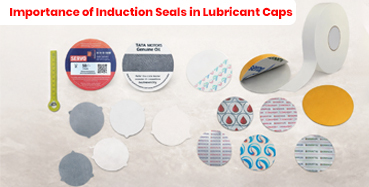
Induction seals in lubricant caps are essential for preventing leaks, protecting product quality, and ensuring tamper-evident packaging. These seals create an airtight barrier between the cap and the bottle, which helps maintain lubricant purity during storage and transportation while also improving overall packaging safety.
Packaging plays a critical role in protecting lubricants from leakage, contamination, and environmental exposure. Since lubricants are widely used in automotive and industrial applications, maintaining their quality during storage and transportation is extremely important.
This is where induction seals in lubricant caps become highly valuable. These seals create a strong barrier between the bottle and the cap, ensuring that the lubricant remains secure and uncontaminated. Through advanced induction sealing for lubricant bottles, manufacturers can provide packaging that is both leak-proof and tamper-evident.
In this article, we will explore why induction seals in lubricant caps are important and how they enhance lubricant packaging safety.
Induction seals in lubricant caps are specialized sealing liners placed inside the cap of a lubricant bottle. These liners bond with the bottle opening through an electromagnetic induction process, creating a tight seal.
Once the bottle is sealed, the induction liner forms an airtight barrier that prevents liquid leakage and protects the lubricant from contamination. This method of induction sealing for lubricant bottles is widely used in modern packaging because it provides both security and product protection.
The process of induction sealing for lubricant bottles involves applying heat through electromagnetic induction to bond a foil liner to the bottle opening.
The process typically includes the following steps:
This process ensures that induction seals in lubricant caps create a reliable and durable seal that protects the product inside.
One of the biggest advantages of induction seals in lubricant caps is their ability to prevent leakage. The seal forms a strong bond with the bottle opening, ensuring the lubricant stays securely contained.
Another important benefit of induction sealing for lubricant bottles is tamper evidence. Once the seal is broken, it cannot be resealed, which helps customers identify whether the product has been opened before purchase.
Lubricants can lose their effectiveness if exposed to air or contaminants. Induction seals in lubricant caps provide an airtight barrier that helps maintain product purity and performance.
By protecting the lubricant from environmental factors such as moisture and air, induction sealing for lubricant bottles helps extend the product’s shelf life.
Packaging technology continues to evolve to meet the growing demands of the lubricant industry. Manufacturers are constantly improving induction seals in lubricant caps to enhance packaging performance.
Some emerging trends include:
These innovations aim to make induction sealing for lubricant bottles even more reliable and environmentally friendly.
Secure packaging is essential in the lubricant industry, where even small leaks can result in product loss and safety risks. Induction seals in lubricant caps play a vital role in preventing leaks, protecting product quality, and ensuring tamper-evident packaging.
By using advanced induction sealing for lubricant bottles, manufacturers can ensure that lubricants remain safe, uncontaminated, and reliable throughout the supply chain. As packaging technologies continue to improve, induction sealing will remain a key solution for high-quality lubricant packaging.
Induction seals in lubricant caps are liners that bond to the bottle opening using electromagnetic induction, creating a leak-proof and tamper-evident seal.
Induction sealing for lubricant bottles helps prevent leakage, protects the lubricant from contamination, and ensures product authenticity.
Yes, induction seals create an airtight barrier that protects lubricants from air, moisture, and contaminants, helping maintain product quality for a longer time.
Yes, induction seals provide clear tamper evidence because the seal must be broken before the product can be used.